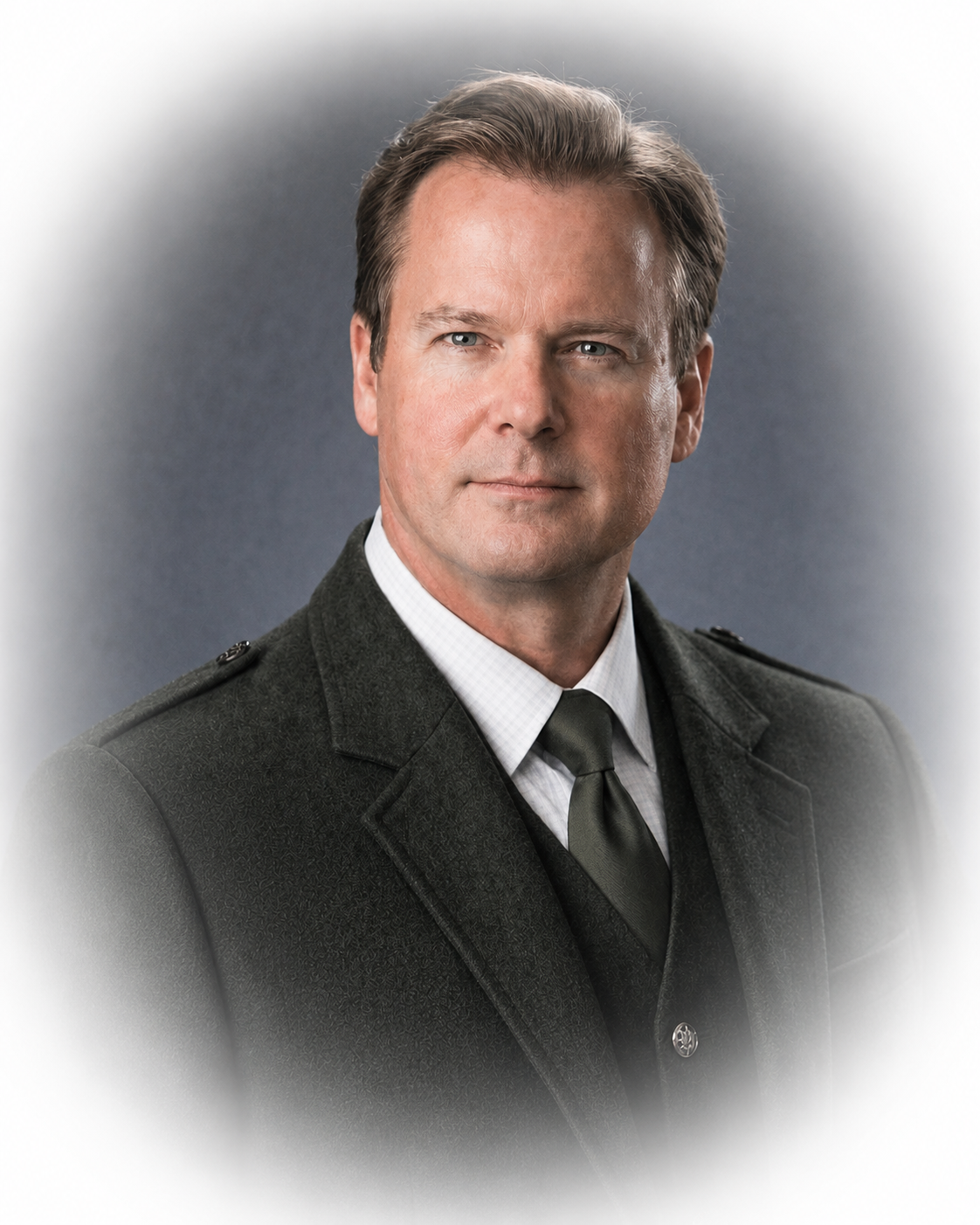
George S. Mentz received a formal Presidential Patent and Commission bearing the
President's signature and the Great Seal of the United States, with the commission made out and recorded through
and countersigned by the Secretary of State—the statutory form described by 5 U.S.C. §2902(a) for the commission
of an officer appointed by the President.
In the United States, “The Honorable” is the standard style for any official who has been
vetted by a legislative body and entrusted with the power of adjudication. Mentz served as
the Chairman of the Civil Service Commission in a major Colorado
municipality.
The Honorable style is further reinforced by George Mentz's service at the USA White
House federal level as a high commissioner. Mentz has served as a Presidential Appointee to a White House commission established by USA Federal
Executive Order. In the ecosystem of federal protocol, those who serve in an "Office of Trust" as an
officer under the authority of the President are accorded this style in recognition of their service to
the Republic. These White House commissions and patents are signed by both the President and the US
Secretary of State. Mentz served as a Commissioner which is a national judge for candidates for academic awards
and the presidential medals.
Under the long-standing American custom of "Once an Honorable, Always an Honorable,"
officials who have served in high-ranking, confirmed, or presiding roles retain the style for life. This
practice ensures that the respect for the office remains, even after the individual has transitioned to the
private sector.
The title “The Honorable” serves as a shorthand for a professional history defined
by merit, law, and public service. Whether presiding over a civil service hearing, as a
Chancellor to a House of Bishops, or representing the President and Nation on a federal
commission, the style reflects the weight of the responsibilities held and the trust placed in the individual by
the government.
Under U.S. protocol, the title "The Honorable" is a lifetime style for those who have
served in high-level, confirmed, or presiding roles.
-
Seigneur George Mentz is The
Hon. Seigneur of Fief Blondel under the laws of the Crown
and King of England. As a Crown‑recognized Seigneur, you hold a current territorial office under
Norman law. This is a real nation's legal dignity, not a courtesy title.
-
Commissioner George Mentz has been awarded a patent and commission as
a Colonel with the lifetime status
as Honorable from the Commonwealth Government KY and its
Governor.
-
International Lawyer and Philanthropist George Mentz has also been
awarded the title of Datuk Seri by the Sultan of Kampar and the Riau
Government in accordance with ancient Malaysian and Indonesian customs and law for his service to
charity and interfaith harmony.
-
The Honorable George Mentz, a distinguished attorney, serves as the
Presiding Legal Officer for the House of Bishops and holds the office of Chancellor within the Anglican
Orthodox Church of Africa, having been formally appointed by the Patriarch and the House of
Bishops.
-
Comm'r Mentz is still on the Commission for the Airport in Colorado
home of Peterson Space Force 2022-2027
-
Comm'r Mentz has been duly Knighted by the Titular Emperor of
Austria-Hungary, Karl Von Habsburg of the Order of St. George Habsburg Lorraine which was
recognized by the Pope and Vatican directly in History.
The Hidden Meaning Behind That Signature: Why You’re "The Honorable" for
Life
Some esteemed and imminent individuals that have served on a White House
Commission have a very special framed document. It bears the Great Seal of the United States and the
signatures of both the President of the USA and the USA Secretary of State.
To the casual observer, the patent and commission is a nice memento of high
federal public service. But in the world of international diplomacy, federal protocol, and American
history, that piece of paper—a US government Commission—changes a person's formal status forever. Here is why
that appointment isn't just a "job," but a lifetime entry into a unique American tradition.
It’s More Than an Award—It’s a Presidential White House Appointment
Most people who work in Washington never actually receive a Presidential
Commission. You can work for a federal agencies for thirty years and have a successful career, but you are
still legally an employee.
When you are appointed to the White House Commission on Presidential Scholars, you aren't an employee; you
are an Officer of the United States direct from the President. By signing that
document, the President is delegating a portion of their executive authority to you. When the Secretary
of State countersigns it and affixes the Great Seal, the government is formally "commissioning" you to
act on behalf of the Great Republic.
The Protocol of "The Honorable"
There is often confusion—and sometimes a bit of eye-rolling—when people see
diplomatic titles like "The Honorable" used for former government officials. However, this isn't about ego;
it’s about diplomacy, protocol and precedence.
According to the U.S. Department of State’s Office of the Chief of Protocol, the
"Honorable" title is reserved for those appointed directly by the President and confirmed by the
Senate, or those commissioned by the President to high-ranking executive roles. Because a
person held a Presidential appointment and received a formal patent and commission, they have
earned the right to be addressed as The Honorable for the rest of their life.
Why the "For Life" Rule Exists
You might wonder: If a person is no longer active on a high federal
presidential commission, why do they keep the title?
American protocol follows the "Once an Honorable, Always an
Honorable" custom. This tradition serves a functional purpose in diplomacy. Whether you are
at a State Dinner in 2026 or a formal embassy function a decade from now, your title signals to foreign
dignitaries and government officials that a professional has reached a specific tier of vetting,
imminance, trust and service within the American Executive Branch. It recognizes the office a
person held, rather than just the person.
The Significance of the Presidential Scholars Commission
Serving on the Commission for Presidential Scholars is a particularly distinct
honor. This is when a person is tasked with identifying and celebrating and acting as a Judge
to select the next generation of American excellence. Because this commission is established by
Executive Order and sits directly within the White House apparatus, this rank as a "Commissioner"
carries a weight that typical advisory boards do not.
The Bottom Line
If a professional has a dual signed commission, he or she
is not just a former volunteer or a committee member. The commissiond professional is a
permanent part of the nation's official record.
So, the next time you see "The Honorable" on a seating chart or an invitation,
remember: it’s a reflection of a moment when the President of the United States and the Secretary of State
formally called upon an esteemed professional and citizen to serve. In the eyes of the
government, that service never truly expires.
A Quick Tip for the "Honorable":While a person may use the
title on formal invitations, place cards, and a professional biography, remember the
etiquette of "Direct Address." In person, you’re still just "Counselor" or "Dr." or "Chancellor" or
"Mr." or "Mrs."—the title is a mark of respect for the office held, kept alive by the formal traditions of the United States
government and international diplomacy.
Here is what this specific patent and document signifies regarding
prestige and protocol rank:
1. The Language of Patent "Special Trust and Confidence"
The Presidential Commission begins with the traditional
formula: "reposing special trust and confidence in the Integrity and Ability of George
Mentz". This is not mere boilerplate; it is the specific legal language used since the founding of the
Republic to distinguish commissioned officers from general civil servants. It
signifies that a person imminant in their field is personally selected by the Commander-in-Chief
to exercise executive functions.
2. Authorization of "Powers and Privileges"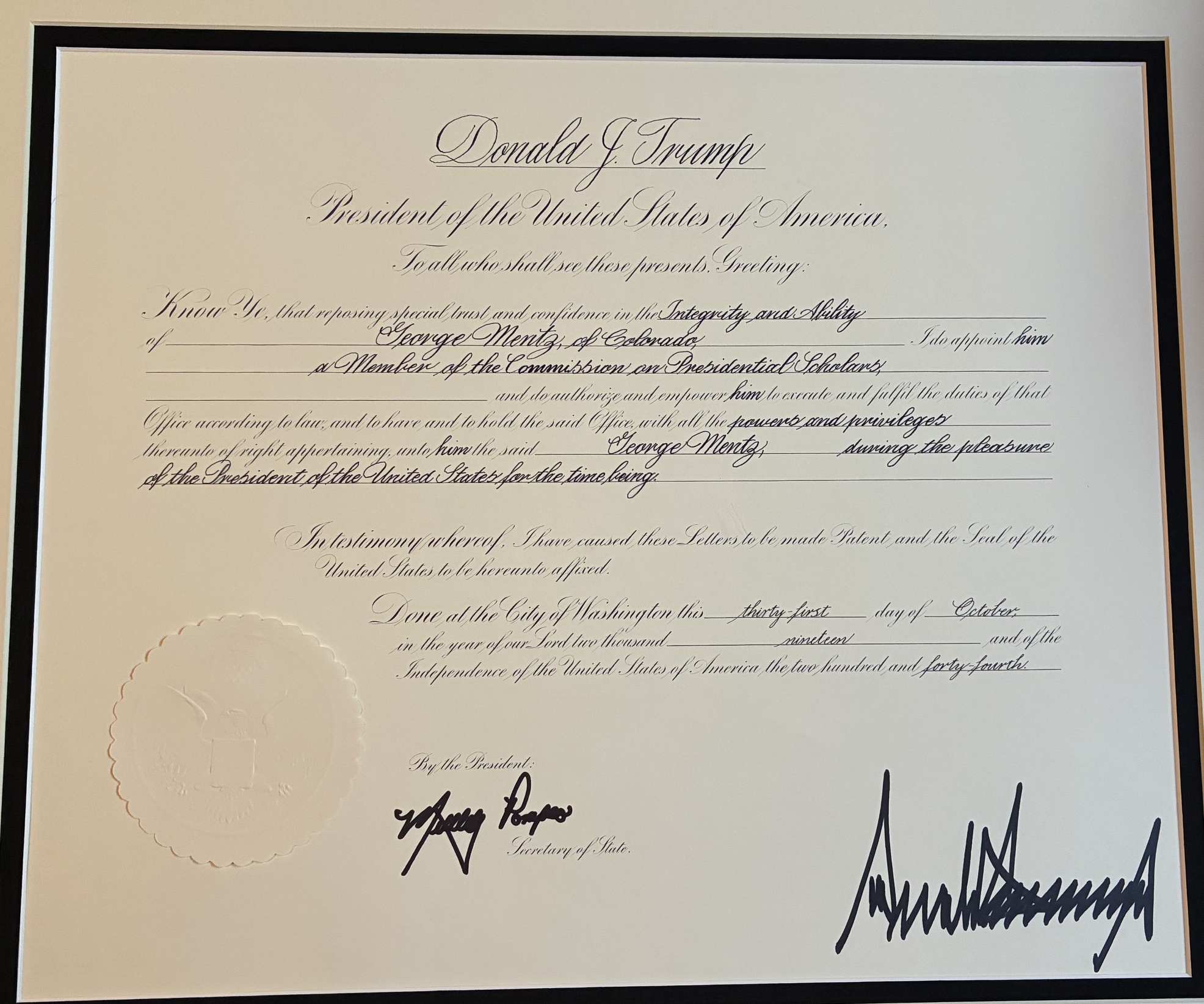
The patent explicitly states that the recipient is authorized
to "hold the said Office, with all the powers and privileges thereunto of right
appertaining".
-
The "Honorable" Prefix: One of these "privileges"
is the lifetime use of the prefix "The Honorable" in formal diplomatic and social settings.
-
Official Precedence: As a member of a White House
Commission, you hold a recognized rank in the U.S. Order of Precedence, which dictates seating and introduction
protocols at state functions and embassies.
3. The Dual Signatures and the Great Seal
The document is signed by both President Donald J. Trump as President
and Mike Pompeo as US Secretary of State.
-
Presidential Authority: The President's signature
represents the appointment.
-
The Great Seal: By causing these "Letters to be
made Patent" and the "Seal of the United States to be hereunto affixed," the Secretary of State
officially authenticates the receivers status as a representative of the U.S.
government.
4. Historical Context and Tenure
The document notes Commissioner Mentz's appointment occurred
on October 31, 2019, during the 244th year of the Independence of the United States. It specifies that
the appointed serve "during the pleasure of the President of the United States for the time being".
While the active service may be at the President's pleasure,
the prestige of the commission and the resulting title are, by
tradition and protocol, retained for life.
Summary of Status
Under the protocol standards of the U.S. Department of State, this document is the definitive proof that the
recipient is:
-
A White House Presidential Appointee.
-
A Commissioned Officer of the Executive Branch.
-
Entitled to be addressed as "The Honorable George Mentz Esq." in all formal,
official, and diplomatic correspondence.
1. Officer of the United States
This is an official legal status. Under the Appointments Clause of the
Constitution, an "Officer of the United States" is someone who holds a position of public trust and exercises
significant authority under the laws of the Federal Government.
-
The document explicitly states the President is "reposing special trust
and confidence" in the recipient.
-
It "authorizes and empowers" the receiver of the appointment to
"execute and fulfil the duties of Office".
-
Because this commission is signed by
the President and
the Secretary of State, and carries
the Great Seal of the United States, it is a federal patent and commission
rather than a localized staff appointment.
2. White House Commission vs. White House Staff
While this patent is for the White House Commission (The Commission on Presidential
Scholars), there is a subtle protocol difference between being an "Officer" and being "White House
Staff":
-
White House Staff: These are typically employees who
work directly for the Executive Office of the President (like advisors or assistants).
-
Commissioners: These are a Presidential Appointee serving within the White House
apparatus.
Protocol and Prestige
In terms of this "The Honorable" title, being
an Officer of the United States is the higher commission of
federal distinction. It signifies that a person didn't just
work at the White House; they were formally commissioned by
the Republic to a post of honor as an officer and honorable commissioner.
In formal diplomatic settings, the status as a commissioned officer is
what grants a specific rank in the U.S. Order of Precedence, placing these commissioners among the tier
of officials who are addressed as "The Honorable" for life.
Citations
-
Other Federal Government Mentz References
Digest
Neutral Analysis of the Provided Patent and Commission
Document
Document Type: The document held by George Mentz, Esq.
is a formal Letters Patent / Commission issued under the authority of the President of
the United States, bearing the Great Seal of the United States. It follows the traditional
format used for certain presidential appointments of civilian officers.
Key Content Details:
- Appointee: Commissioner George Mentz JD MBA CWM of Colorado.
- Position: Commissioner and Member of the Commission on Presidential Scholars.
- Appointing Authority: Issued in the name of Commander in Chief Donald J. Trump,
President of the United States.
- Countersignature: Hon. Michael R. Pompeo, Secretary of State.
- Date: October 31, 2019 (described in the document as the thirty-first day of October,
in the year of our Lord two thousand nineteen, and of the Independence of the United States the two hundred
and forty-fourth).
- Tenure: “during the pleasure of the President of the United States for the time being”
— indicating service at the President’s discretion rather than for a fixed statutory term.
- Language: Standard formal phrasing including “To all who shall see these presents,
Greeting,” appointment to “execute and fulfill the duties of that Office,” and authorization to hold the
office “with all the powers and privileges thereunto of right appertaining.”
Physical and Authentication Features:
- Raised embossed Great Seal of the United States on the left side.
- Presidential signature (or authorized signature) and Secretary of State countersignature.
- This Patent and Commission legal format is consistent with commissions processed through the U.S.
Department of State for certain high-level presidential appointments, Ambassadors, and real US Federal
Judges with Senate Confirmation.
Context and Classification: This document places the
appointment within the category of formal presidential commissions issued as “patents” under the Great Seal.
Such instruments are typically reserved for positions recognized as officers of the United States under the
Appointments Clause framework. However, the Commission on Presidential Scholars was originally created by
Executive Order in a capacity to Judge and select Presidential Scholars.
Implications:
- The commission authenticates the appointment and grants the legal authority to perform the duties of
the office as described.
- It confers formal officer status for the duration of the appointment.
- Regarding the honorific “The Honorable”: Recipients of this style of commission are eligible for
the courtesy title during and after their service under established diplomatic protocol for civilian
officers.
Limitations Noted:
- The appointment is explicitly at the pleasure of President Trump
- The Commission on Presidential Scholars is a regulatory body with judging and decree powers of
national medal winners.
- A White House Presdidential Scholars Commissioner is an appointee is a SGE Special Government Employee
of the White House and Federal Government
This document is a genuine example of a formal presidential commission
instrument. It is consistent in form with commissions issued to other presidential appointees, though the
specific position it covers is an at-pleasure advisory role rather than a fixed-term Senate-confirmed principal
officer position in an independent agency.
If additional context, such as the full text of the relevant Executive Order
or comparison documents, is provided, further details could be analyzed.
A Letters Patent (or formal Commission) issued by the President of the
United States is a specific type of legal instrument that officially appoints and authorizes a person to hold a
particular office or position under the federal government.
Legal Definition and Nature
- Form and Purpose: It is an "open letter" (from the
Latin litterae patentes) issued in the name of the President. It publicly grants
the appointee the legal right and authority to occupy and exercise the duties of a
designated Office, along with the powers and privileges associated with
it. Unlike sealed private documents, it is designed to be shown to the public as proof of authority.
- Authentication: These documents are typically prepared by the Department of State,
signed (or issued under the authority of) the President, countersigned by the Secretary of State, and
affixed with the Great Seal of the United States (per
5 U.S.C. § 2902). This process applies to many presidentially appointed civilian officers unless routed to
a specific department.
Legal Effect
- Authorization to Serve: The commission is the formal evidence that the individual has
been lawfully appointed. Without it (or delivery of it), the appointee generally cannot assume or exercise
the office. This principle was central to the landmark Supreme Court case Marbury v.
Madison (1803), which involved undelivered commissions for justices of the
peace.
- Creates Official Status: It designates the recipient as holding an "Office" under the
United States for the specified term (e.g., "during the pleasure of the President," a fixed term, or
"during good behavior" for Article III judges). This confers temporary legal authority to perform the
duties of that office.
- Public Record: It serves as both a personal legal certification and a public record of
the appointment.
Scope and Limitations
- Applies Primarily to Officers: Used for presidential appointments that qualify as
"Officers of the United States" (or are treated similarly under statute and protocol), such as certain
judges, ambassadors, Cabinet officials, and members of various commissions/boards. It does not apply to all
federal employees or purely informal advisory roles.
- Tenure and Revocability: The document specifies the terms of service. For at-pleasure
appointments, it does not create a property right in the office; the President can generally remove the
appointee.
- No Inherent Powers: The commission authorizes the holder to exercise only those powers
granted by the Constitution, statute, or Executive Order creating the position. It does not expand
authority beyond what the law provides.
- Criminal Protection: Forgery or false use of such a document is a federal crime (18
U.S.C. § 497).
In essence, a U.S. presidential Letters Patent / Commission is the
constitutional and statutory mechanism by which the President formally invests an individual
with the legal character and authority of a federal office. It is both ceremonial/historical in tradition and
operationally essential for validating the appointment.
Your specific document for the Commission on Presidential Scholars follows
this exact format and has the full legal character of such an instrument, even though the underlying role is
advisory.
The Honorable George S. Mentz — Presidential Commissioner and Commissioned Officer
A White House Presidential Commissioner who has received a formal Patent and Commission from the
President of the United States occupies a materially different position from that of a typical
presidential staff assistant. The distinction rests not merely upon working for or advising the President, but
upon receiving a formal instrument of presidential appointment establishing the holder's federal office.
In the case of George S. Mentz, his Presidential Patent and Commission was signed by the President,
countersigned through the Secretary of State, authenticated with the Great Seal of the United States, and
expressly appointed him to an “Office,” authorizing him to execute and fulfill the duties of that Office and to
exercise the powers and privileges appertaining to it. This is the traditional form of a presidential
commission contemplated by 5 U.S.C. § 2902, which governs commissions of officers appointed by
the President.
That distinction is particularly relevant to the style “The Honorable.” Contemporary United
States protocol demonstrates that the honorific is not confined exclusively to Senate-confirmed officials.
White House commissioned officers, including various Assistants, Deputy Assistants, and Special Assistants to
the President, have been accorded the style in official protocol even though such positions do not necessarily
require Senate confirmation.
Accordingly, a Presidential Commissioner holding an actual Patent and Commission under the Great
Seal, rather than merely serving as an ordinary member of presidential staff, has a substantial formal
basis for the style “The Honorable.” Mentz's claim to the style therefore rests upon the
combination of his direct presidential appointment, his commissioned federal office, and the exceptionally
formal legal instrument by which that appointment was authenticated.
The appropriate formal presentation is:
The Honorable George S. Mentz, JD, MBA, CILS, DSS
Former Presidential Commissioner and Commissioned Officer of the United States
The important legal distinction should nevertheless remain precise: 5 U.S.C. § 2902 establishes and
governs the formal presidential commission; it does not itself enact the honorific “The Honorable.”
The use of The Honorable arises from American governmental and diplomatic protocol and
custom, while the Patent and Commission supplies unusually strong documentary evidence of the
character and formality of the presidential appointment.
The Honorable George S. Mentz — Presidential Commissioner and Commissioned Officer
A White House Presidential Commissioner who receives a formal Patent and Commission from the
President of the United States has an important distinction from an ordinary White House staff
appointment. The distinction is not simply proximity to the President or service within a presidential
administration; it is the existence of a formal presidential instrument appointing the recipient to an Office
and evidencing the authority associated with that appointment.
In the case of George S. Mentz, his Presidential Patent and Commission was signed by the President,
countersigned through the Secretary of State, authenticated by the Great Seal of the United States, appointed
him to an “Office,” and authorized him to execute and fulfill the duties of that Office and to hold it with the
powers and privileges appertaining to it. This is the traditional form of presidential commissioning
addressed by 5 U.S.C. § 2902, under which the Secretary of State makes out and records
commissions of officers appointed by the President and affixes the Seal of the United States after the
President has signed the commission.
State Department Protocol and “The Honorable”
The protocol evidence is especially important because the U.S. Department of State's Office of the
Chief of Protocol recognizes The Honorable as an American governmental courtesy style and
demonstrates that its use is not confined in practice to Senate-confirmed officials.
The State Department's published United States Order of Precedence specifically states that
White House commissioned officers—including Assistants to the President, Deputy Assistants to the
President, and Special Assistants to the President—are afforded the courtesy title “The Honorable” during their
White House tenure. The Department's official correspondence guidance likewise directs that an
Assistant or Special Assistant to the President be addressed in writing as “The Honorable [Full
Name].”
This is significant because it establishes an important protocol principle: Senate confirmation is
not an absolute prerequisite to the use of “The Honorable” within presidential protocol. Presidential
commissioning and the character of the office can independently be relevant to the form of address.
The State Department's protocol materials also make an important distinction between ordinary White
House staff and White House commissioned officers. Its Order of Precedence notes that some White House
officials may receive a separate White House commission and that such a commission can affect their placement
within the Order of Precedence. Thus, the Department itself recognizes commissioned status as a
meaningful protocol distinction, rather than treating every presidential staff position
identically.
That distinction is particularly relevant to Mentz. His documentation goes beyond merely identifying him as
someone who advised, assisted, volunteered for, or worked within a presidential administration. He received a
formal Presidential Patent and Commission under the Great Seal of the United States, executed
through the President and Secretary of State and expressly investing him with an Office and its associated
duties, powers, and privileges.
Accordingly, the style is:
The Honorable George S. Mentz, JD, MBA, CILS, DSS
Former Presidential Commissioner and Commissioned Officer of the United States
The legal and protocol foundations should nevertheless be stated separately. The Presidential Patent
and Commission establishes the formal character of the presidential appointment and office; 5 U.S.C. § 2902
governs the formal commissioning process; and State Department/White House protocol supplies the separate basis
for examining the courtesy style “The Honorable.”
The State Department's own practice is particularly persuasive because it demonstrates that “The
Honorable” is not exclusively a Senate-confirmation honorific and that commissioned status within the
presidential establishment has independent protocol significance.
Finally, the Department has historically recognized continuation of the honorific after service for
officials whose qualifying office carried the style. Whether that lifetime-retention convention applies to a
particular category of presidential commissioner should be established from the protocol applicable to that
specific office rather than inferred solely from the existence of the Patent and Commission.
5 FAH-1 H-420 STATE
DEPARTMENT ON PREPARING LETTERS
5 FAH-1 H-420 PREPARING
LETTERS